

Atomic Emission Spectrometry
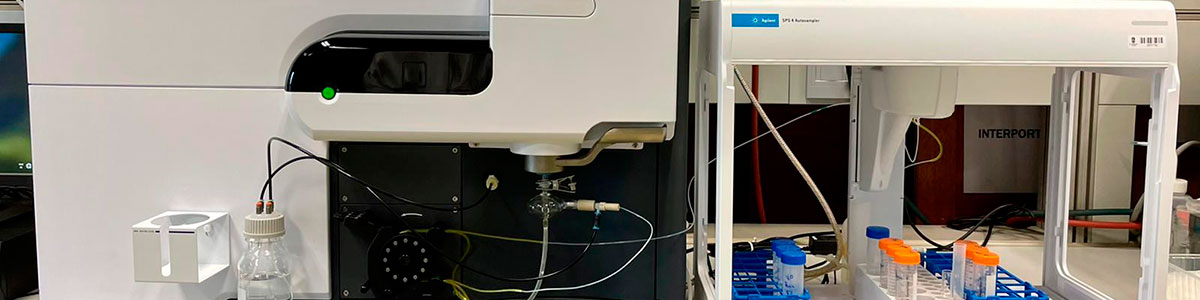
Atomic Emission Spectrometry is an instrumental analysis technique that allows the detection and quantitative determination of most chemical elements.
The equipment available at CACTI is an elemental analyzer that works with a nitrogen plasma emission source.
Sometimes different techniques with greater sensitivity are used such as:
Cold vapor : technique used for the analysis of mercury.
Hydride generator : allows the analysis of those elements capable of forming volatile hydrides (As, Se and Sb, among others).

Instrumental Facilities
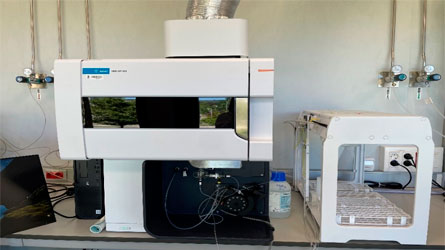
Agilent 4210 MP-AES Spectrometer.
Accessories:
Varian GTA-77 Steam Xerator
Agilent Technologies Model 5800 Inductively Coupled Plasma Atomic Emission Spectrometer (ICP-OES).
Applications
- Quantification of more than 60 metallic elements in liquid and solid samples at macrocomponent and trace levels.
- Quality control of materials, food, cements, oils, etc.
- Environmental control: drinking water, sea water, waste water and groundwater.
- Agriculture and food: soils, sediments, plant materials, food, etc.
- Toxicological analyses of blood and urine (metals).
Sample requirements
- They must be presented correctly identified and numbered sequentially.
- They must be in aqueous solution and filtered in order to be analyzed.
- The samples must be homogeneous and representative.
- In the case of complex matrices or extracts, it is advisable to include the extractant to prepare the standards (contact the technician) .
- Samples containing HF are not analyzed.
More information
Cristina Pérez Novo – Sandra Gil Casal
+34 988 387 414