
Sample Preparation
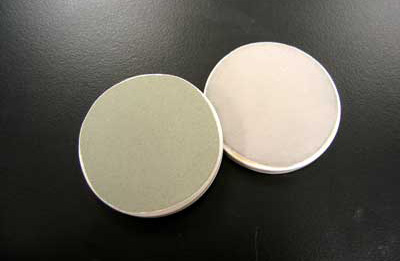
Preparation of pressed tablet
Solid powder samples that are to be analyzed by XRF for the determination of major, minor and trace chemical elements require preparation before their measurement. One of the usual preparation methods is to obtain a compact and homogeneous pellet of the material.
The sample must be dry and ground (ideal particle size < 100 µm). Compaction is carried out using a hydraulic press that allows the production of discs with a diameter of 40 mm. As the tablet to be prepared must be well compacted so as not to disintegrate inside the equipment, a small amount of a binding agent (boric acid, wax or cellulose powder) is added to the sample in cases where it is necessary. The amount of solid sample required to manufacture a tablet is 5-6 g. Equipment: Herzog hydraulic press. Graseby speca hydraulic press.
More information
Estefanía López- Vicente Rodríguez – Jorge Millos
986 812 238 – 986 130 127 – 986 130 125
fani@uvigo.es – vicen@uvigo.es – jmillos@uvigo.es
Pearl preparation
In the case of solid samples that are going to be analyzed by XRF for the determination of major chemical elements, the most advisable method is fusion. In this type of preparation, finely ground samples (particle size < 60 µm) are calcined at 950ºC to eliminate all organic matter and volatile components. The calcined material is then melted with the help of a flux at high temperature (1200º C) and finally transferred to a mold where it cools. The final result is known as a pearl, which is a solid with a glassy appearance. Since the process involves the use of high temperature, this type of preparation is not recommended for the determination of minor, trace or volatile elements. Among the advantages of this type of preparation, we highlight that by melting the material, an effective particle size of approximately atomic size is achieved and the mineralogy of the sample is eliminated, and therefore the matrix effect is minimized. Another advantage is that standards can be prepared from oxides, carbonates, phosphates, etc., so calibrations can be adjusted to each type of sample. The fluxes used in the Service are lithium tetraborate and lithium metaborate. The amount of sample needed for the preparation of each bead is approximately 2.5-3 g.
Equipment:
Claisse Perlator.
More Information
Estefanía López – Jorge Millos
986 812 238 – 986 130 127 – 986 130 125
vicen@uvigo.es – jmillos@uvigo.es – fani@uvigo.es
Dry sample preparation
We call dry sample preparation the process of eliminating organic matter, applying in our case high temperatures, and subsequent dissolution of the residue by treatment with diluted acids.
It is used in various samples such as soils, plants, marine products, etc. It cannot be used for the determination of volatile analytes such as Hg, Pb, As, Sn, Se, etc.
Sample requirements:
In the case of plants, geological materials and similar, the samples must be well dried.
In the case of food, fresh samples are accepted.
Homogeneous in all cases.
Representative.
Equipment:
Carbolite ELF 11/6B muffle furnace.
More Informatio
Jorge Millos – Rosa Mª Lomba
986 812238 – 986 813885
jmillos@uvigo.es – rlomba@uvigo.es
Wet sample preparation
We call wet sample preparation the process by which, starting from a solid, colloidal or heterogeneous liquid sample, we can obtain a homogeneous aqueous solution with the analytes of interest in solution. For this, we use an attack with strong acids in a closed system, with the application of heat and, in general, pressure higher than atmospheric to increase the attack speed.
Its use is mandatory for the determination of volatile elements that cannot be prepared dry (Hg, As, Sn, etc.) and for complex matrices that can only be broken down in this way.
It is applied to various samples such as geological materials, plant and animal tissues, sludge, food, etc.
Sample requirements:
In the case of plants, geological materials and similar, the samples must be well dried.
In the case of food, fresh samples are accepted.
Homogeneous in all cases.
Representative.
Equipment:
Savillex Teflon Dischargers
More information
Jorge Millos – Rosa Mª Lomba
986 812238 – 986 813885
jmillos@uvigo.es – rlomba@uvigo.es
Extraction and concentration
Sample requirements and limitations:
Documentation to be submitted: Application Form duly completed.
Minimum sample quantity required: depends on the technique to be used ( consult us ).
Maximum number of samples per request: depends on the technique to be used ( consult us ).
Collection period for measured samples: 1 month.
Refrigeration of analyzed samples: 1 week after delivery of results.
Sample requirements and limitations:
Documentation to be submitted: Application Form duly completed.
Minimum sample quantity required: depends on the technique to be used ( consult us ).
Maximum number of samples per request: depends on the technique to be used ( consult us ).
Collection period for measured samples: 1 month.
Refrigeration of analyzed samples: 1 week after delivery of results.
Technical bases:
Most samples that are determined by analytical techniques are too complex or too diluted to be introduced directly into the equipment. Therefore, sample extraction and concentration techniques are used to eliminate the components of the matrix that are not of interest (interferences), as well as concentrate the analyte of interest so that it can be detected.
Depending on the mechanism or process to be employed, we can classify the extraction techniques into:
Extraction method.
Liquid-liquid (LL).
Solid-liquid (SL).
Solvent-accelerated (SA).
Solid-phase (SPE).
Analytical supercritical (SCE).
Microwave-assisted (MAE).
Using chromatographic techniques, such as Liquid Chromatography or Thin Layer Chromatography.
Using classical techniques: crystallization, precipitation, distillation, filtration, etc.
Complementary techniques such as: dialysis and microdialysis or ultrafiltration.
Applications:
Pharmaceuticals: antibiotics, sedatives, steroids, analgesics.
Biochemistry: amino acids, proteins, carbohydrates, lipids.
Food: artificial sweeteners, antioxidants, additives.
Contaminants: pesticides, herbicides, phenols, PCBs.
Clinical medicine: bile acids, drug metabolites, urine extracts, estrogens.
Forensic chemistry: drugs, poisons, blood alcohol, narcotics.
Sample requirements and limitations:
Documentation to be submitted: Application Form duly completed.
Minimum sample quantity required: depends on the technique to be used ( consult us ).
Maximum number of samples per request: depends on the technique to be used ( consult us ).
Collection period for measured samples: 1 month.
Refrigeration of analyzed samples: 1 week after delivery of results.
Equipment:
Solid Phase Extraction Cartridges, Reversed Phase, Normal Phase and Ion Exchange.
Chromatographic equipment and fraction collector.
Microwave assisted digester.
Refrigerated centrifuges, distillation and filtration equipment.
Accelerated solvent extraction system.
More information
Jorge Millos – Alberto Acuña – José Gómez
986 812 238 – 986 130 126 – 986 130 124
jmillos@uvigo.es – berto@uvigo.es – josegomez@uvigo.es