

X-ray spectrophotometry
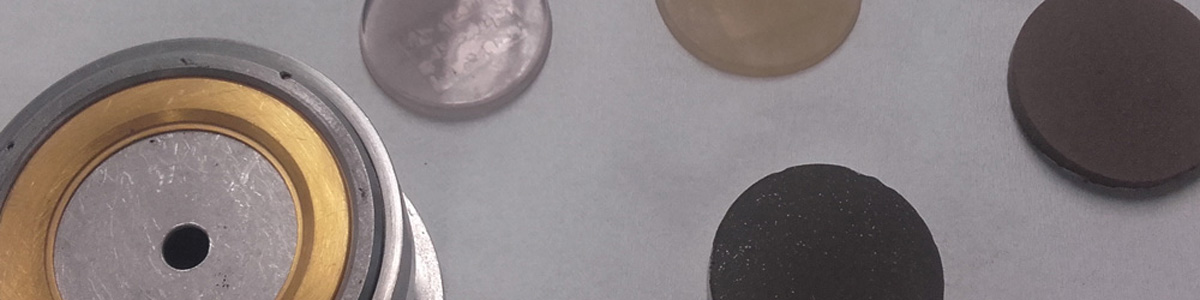
The X-ray Spectrophotometry unit consists of an X-ray dispersive X-ray fluorescence spectrometer (WDXRF).
X-ray Fluorescence (XRF) is based on the measurement of intensities, which can then be transformed into concentrations with appropriate calibration curves. An XRF device consists of an excitation source, usually an X-ray tube, which delivers to the sample a set of wavelengths composed of the continuous spectrum and the characteristic radiations of the element of which the tube is composed. This set of wavelengths produces secondary fluorescence radiation in the sample, due to the interaction of the excitation radiations with the elements that make up the sample, emitting a beam of X-rays that can be measured with an appropriate detection system.
The general procedure for performing XRF analysis consists of two stages: excitation and emission. First, the sample is bombarded by primary radiation that causes the atoms in the sample to move to a higher energy or excited state by emitting electrons from them. Due to the instability of this excited state, the atom returns to its ground state, producing the emission of fluorescent or secondary X-rays.
In the case of wavelength dispersive spectrometers (WDXRF), the generated X-rays, suitably collimated, are incident on an analyzer crystal that disperses the fluorescent radiation into monochromatic component wavelengths, each of which is characteristic of a chemical element and a specific electronic transition. The diffracted beam for each angular position of the crystal is incident on a detector, which will generally be a gas detector proportional to flux or scintillation that will convert the photons into electrical pulses.
Instrumental Facilities
X-ray fluorescence spectrometer using wavelength dispersion, Siemens SRS3000.
For Sample Preparation:
- Perladora Claisse.
- Herzog hydraulic press.
Applications
The field of application of this technique covers major, minor and trace elements, since it allows the determination of any chemical element with an atomic number greater than 9 (Fluorine). It allows the inorganic chemical analysis of various types of solids such as: geological material, dried plants, mortars, dusts, waste, glass, plastics, etc.
Sample requirements
There are samples, such as metals or glass, that do not require preparation and are measured directly. The piece, in this case, must have dimensions of 30 mm x 30 mm, in the case of square samples, or a minimum diameter of 8 mm and a maximum of 40 mm, in the case of circular samples.
- In the case of solids or samples that do need preparation, this can be done in a pressed tablet or pearl. About 5g of sample will be needed for tablet preparation and 2.5g for pearl preparation.
- Liquid samples cannot be measured.
- Time for collecting measured samples: 1 month